
The Surprisingly Wild History of Apple Strudel, And Why It Still Pulls Us Back Into The Kitchen.
I used to think apple strudel was just that pretty little spiral of pastry you see behind bakery glass. You know the one. Golden, flaky, dusted with sugar like it accidentally walked through a snowfall on its way to your plate.
Turns out, the story behind it is way messier, way older, and way more interesting than the neat slice sitting on a white plate lets on.
Before I take you through it, picture this with me.
A wooden table. A big bowl of apples that smell like the first cool day of fall.
Greaseproof paper sticking softly to your fingers.
Warm butter melting exactly where it lands.
Okay. Let’s get into the good part.
Where Apple Strudel Actually Came From.
Here is the thing nobody tells you. Apple strudel did not start in Austria even though everyone associates it with Vienna, cozy cafés, lace curtains, and elegant plates that make you sit up a little straighter.
Nope.
Its DNA is tangled up with invaders, trade routes, and centuries of people stealing and borrowing ideas from each other the way we all steal recipes from our grandmothers.
It begins in the Middle East, of all places.
Long before apple strudel was being served to royalty in Vienna, cooks in the Middle East were rolling impossibly thin sheets of pastry around nuts, honey, and fruit. Think of early versions of baklava. Paper thin dough you could practically read letters through.
When the Ottoman Empire expanded into Europe, they brought their food with them. Soldiers, merchants, travelers, and chefs carried their pastry traditions the same way we all carry snacks in the car for our kids. It just made sense.
And as the Ottomans reached Hungary, something magical happened. Hungarian cooks looked at that paper thin dough and went,
“Yes. I can make that even better.”
Hungary gets involved, and suddenly things get serious.
Hungarians started experimenting with dough that could stretch across an entire table without tearing. Imagine that. A sheet so thin you could stretch it until it looked like a silk curtain catching light.
And because apples were everywhere in Central Europe, someone eventually decided to wrap them inside that dough along with sugar, raisins, and warm spices.
Simple. Clever. Completely addictive.
Then Austria claimed it like a proud parent.
Once the Habsburg Empire took shape, recipes traveled fast. Austria adopted this new rolled pastry and refined it into what we now know as Apfelstrudel.
It became a favorite in royal courts. A showstopper dessert. A “we are having guests tonight, bring out the fancy plates” kind of dish.
And since Austria was known for precision, elegance, and structure, apple strudel slowly transformed from a rustic table-spread pastry into the beautifully coiled, layered dessert we recognize today.
Why Apple Strudel Still Hits Home Today.
Maybe it is the smell.
Maybe it is the soft crackle when your fork breaks through the crust.
Maybe it is the way cinnamon sneaks up your nose and suddenly you are eight years old again, standing in someone’s warm kitchen while something magical bakes in the oven.
Apple strudel is nostalgic even if you have never had a grandmother who made it.
It is the kind of dessert that makes people gather without even trying.
It feels like autumn, comfort, and love had a little meeting and decided to wrap themselves in pastry.
And moms know this.
Parents know this.
Anyone who cooks from the heart knows this.
But let’s be honest for a second.
Traditional apple strudel takes… effort.
The stretching.
The rolling.
The praying
Sometimes we want the cozy feeling without the two hour performance in the kitchen.
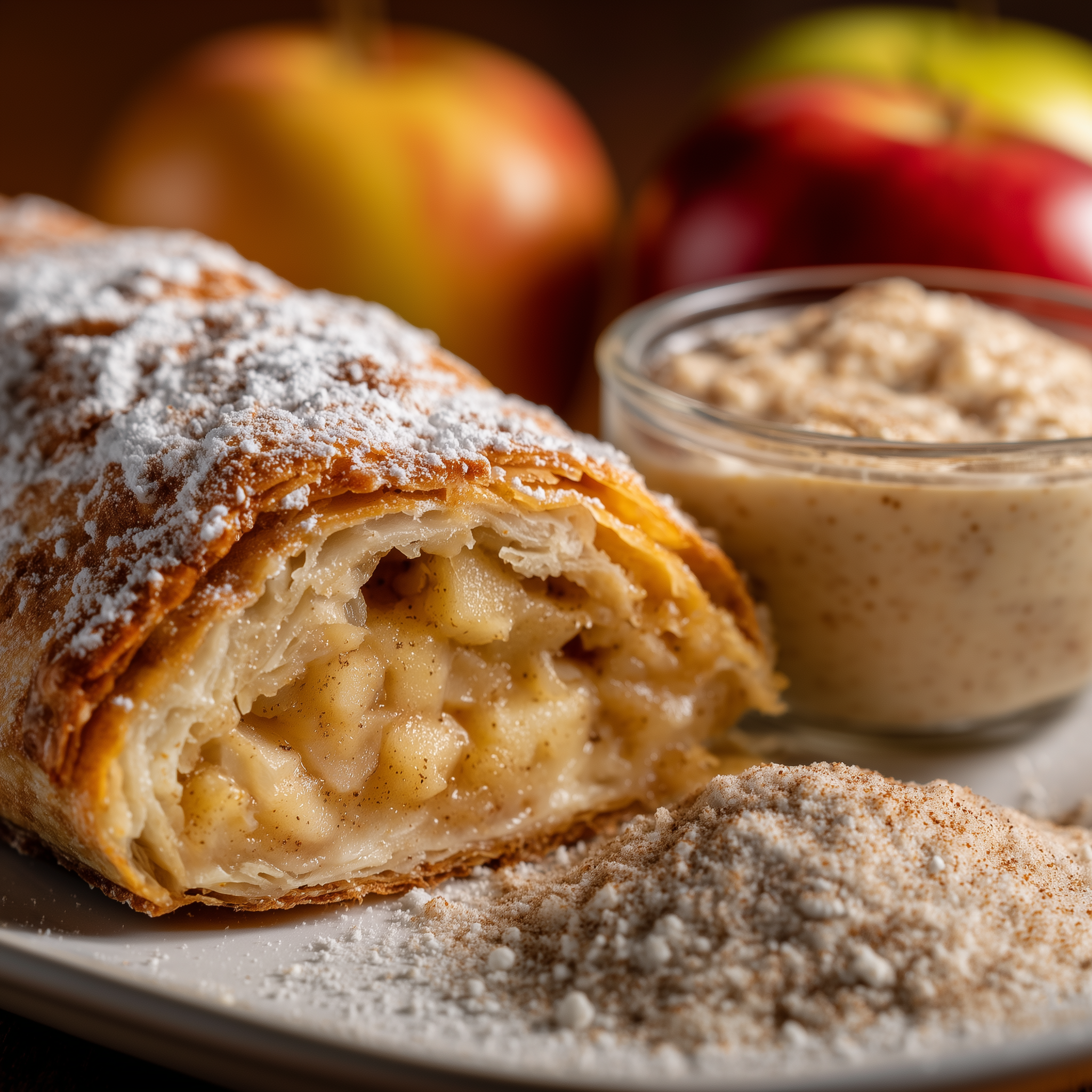
Warm. Cozy. Dessert-level delicious.
Bring the flavor of a fresh-baked apple strudel straight to your table no oven, no fuss, just pure comfort in a bowl.
This dreamy blend of sweet apple, cinnamon, vanilla, and warm spices turns anything it touches into a nostalgic, fall-inspired treat.
Dip in with graham crackers, pretzels, fruit, or swirl it into yogurt, pancakes, waffles, or toast for a dessert-worthy upgrade.
Creamy, sweet, and ridiculously addictive it’s like your kitchen suddenly learned how to bake.
How to make it:
1️⃣ Mix with cream cheese + whipped topping (or Greek yogurt for a lighter twist).
2️⃣ Chill for 1 hour to let the flavors deepen.
3️⃣ Serve cold and get ready for those “oh my god” reactions.
Perfect for parties, dessert boards, holiday spreads, or anytime you want a cozy hit of cinnamon-apple goodness.
Warm spice. Sweet apple. Instant comfort. 🍎🔥
✅ Gluten-Free!
May contain small amounts of Sugar and Salt.